Chelsea_Sun ・ 7 hours ago
NextFin News -- Embodied-intelligence startup OriginFlow had been in operation for only five months when it successively closed multiple rounds of financing—including an angel round, a strategic round, and a Pre-A1 round—raising more than RMB 500 million in total.
The angel round was co-led by Lanchi VC and VitalBridge; the strategic round subsequently brought in strategic and industrial investors including 58 Strategic Investment, Puhua Capital, and the Shuimu Tsinghua Seed Alumni Fund, with existing shareholders such as Lanchi VC and VitalBridge also making an oversubscribed follow-on investment worth tens of millions of yuan; the Pre-A1 round was led by Monolith Capital, with participation from top-tier market-oriented institutions while existing shareholder Puhua Capital also increased its stake with an oversubscribed follow-on investment.
OriginFlow’s founder and CEO, Qin Shentao, is still in his 20s. Born in 2001 in Shanxi province, he earned his bachelor’s degree from the School of Mechatronics Engineering at Harbin Institute of Technology(HIT). During his time there, he received HIT’s President’s Award and the May Fourth Youth Medal, and led his team to multiple championships in robotics competitions. Qin is currently a PhD candidate at Tsinghua University and began his entrepreneurial journey in 2025.
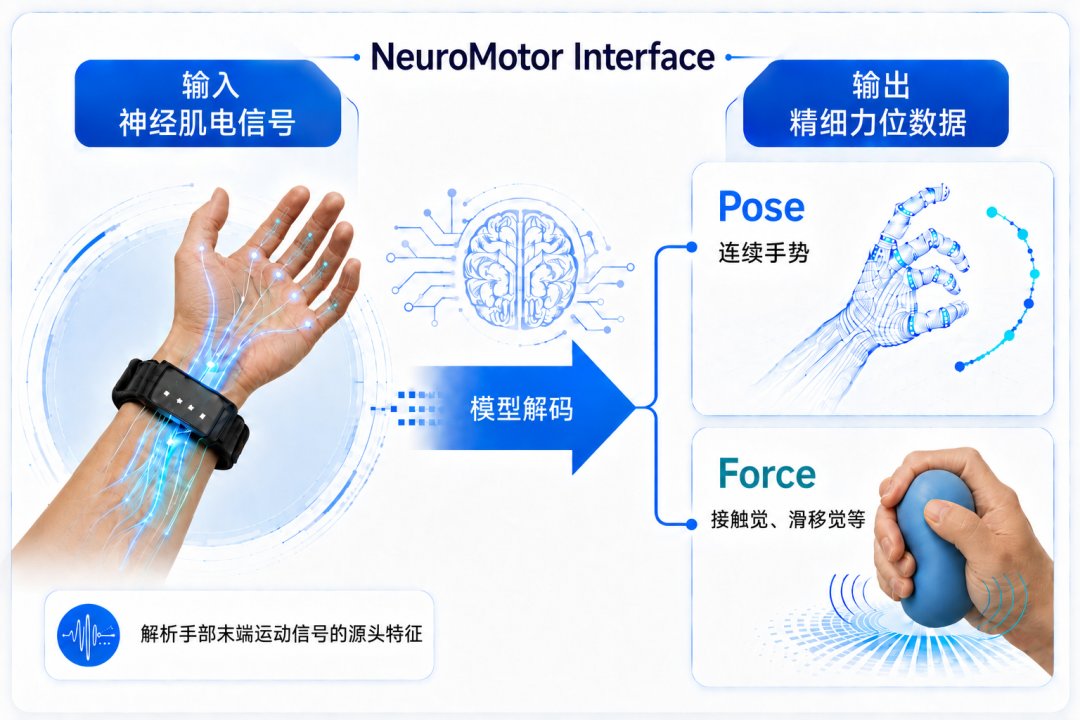
The core technological breakthrough lies in the NeuroScale data-collection paradigm that it was the first to propose and bring into real-world use. Centered on surface electromyography (sEMG) signals as the primary carrier, the paradigm captures the electrical signals generated by human muscle contractions through a proprietary EMG acquisition kit, then encodes them with its foundation model, PULSE, to accurately reconstruct native, continuous multimodal information such as hand pose, exerted force, and haptic feedback. This technical route directly connects to the body’s native “intention–muscle–action” transmission chain, effectively eliminating asynchronous data errors and, while remaining non-intrusive and imperceptible to the user, compensating for the limitations of the traditional EgoScale paradigm—such as failure under visual occlusion and the absence of force and tactile signals—thereby truly creating a “shadow mode” for the embodied intelligence domain.
This mode delivers two key advantages: first, it significantly improves data-collection efficiency by avoiding complicated conversion processes and dramatically shortening training cycles; second, it substantially reduces costs. Reportedly, a single set of OriginFlow’s data-collection equipment is priced at only around RMB 1,000. Its full-stack solution lowers the barrier to device deployment by optimizing hardware architecture and integrating supply-chain resources, making it better suited for large-scale rollout across multiple scenarios and effectively addressing generalization challenges across different populations, environments, and embodiments.
Industrial deployment is also advancing in parallel. OriginFlow is building out around two major scenarios—industrial manufacturing and in-home services. In the industrial sector, the company is partnering with leading global high-end manufacturers to jointly establish application scenarios for industrial embodied-data collection. In the home-service scenario, it is working with industry partners such as 58 Group to collect massive volumes of real human operational data around high-frequency tasks including clothing organization, household cleaning, and kitchen work, building a skills database for domestic-service robots and providing continuous, high-quality “data fuel” for the capability evolution of home service robots.
Looking ahead, NeuroScale technology is expected to extend to the next generation of human–machine interaction entry points. As neuromuscular EMG technology matures, this low-latency, high-precision, low-intermediary form of human–machine interaction is poised to open up new application space in areas such as robotics, smart hardware, medical rehabilitation, and spatial computing.(Author | Guo Hongyun, Editor | Yang Lin)
 LIKE 0