Chelsea_Sun ・ 4 hours ago
Momenta launches its share offering
For years, the capital markets treated autonomous-driving startups less like businesses and more like futuristic research labs. Valuations were untethered from reality, buoyed entirely by grand, long-horizon promises of Level 4 autonomy and fleets of driverless robotaxis roaming science-fiction cityscapes.
That era of speculative idealism is officially over.
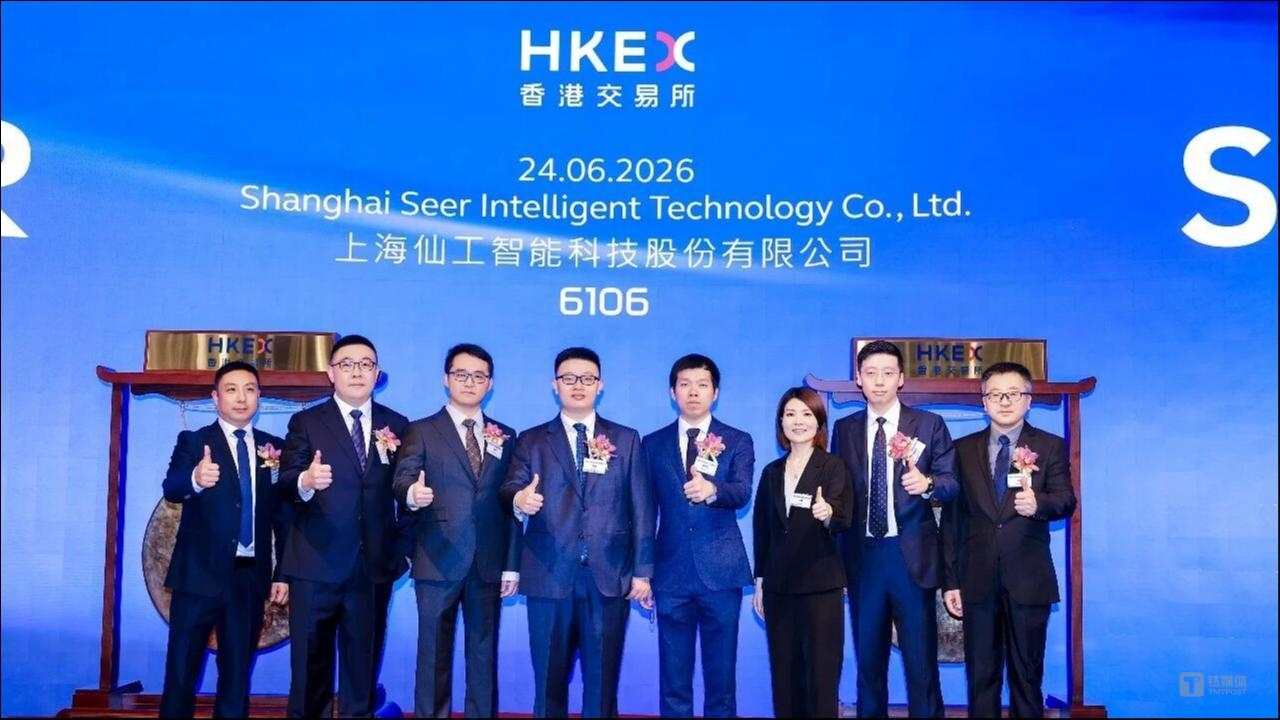
On June 29, Momenta released its global offering prospectus, launching a high-profile share sale that marks its debut on the Hong Kong Stock Exchange under the ticker "6880." The autonomous-driving frontrunner is presenting public markets with a fundamentally altered thesis: the industry’s defining metric is no longer the sophistication of its algorithms, but the cold mechanics of its balance sheet. Investors are no longer buying speculative tech roadmaps; they are evaluating mass-production volume, customer stickiness, margin curves, and operational cash burn. At this critical juncture, Momenta’s business is split into two distinct tracks: a mass-market passenger vehicle solution that serves as its near-term financial engine, and a nascent Robotaxi pipeline positioned for long-term commercialization.
Software Licensing Unlocks Operating Leverage
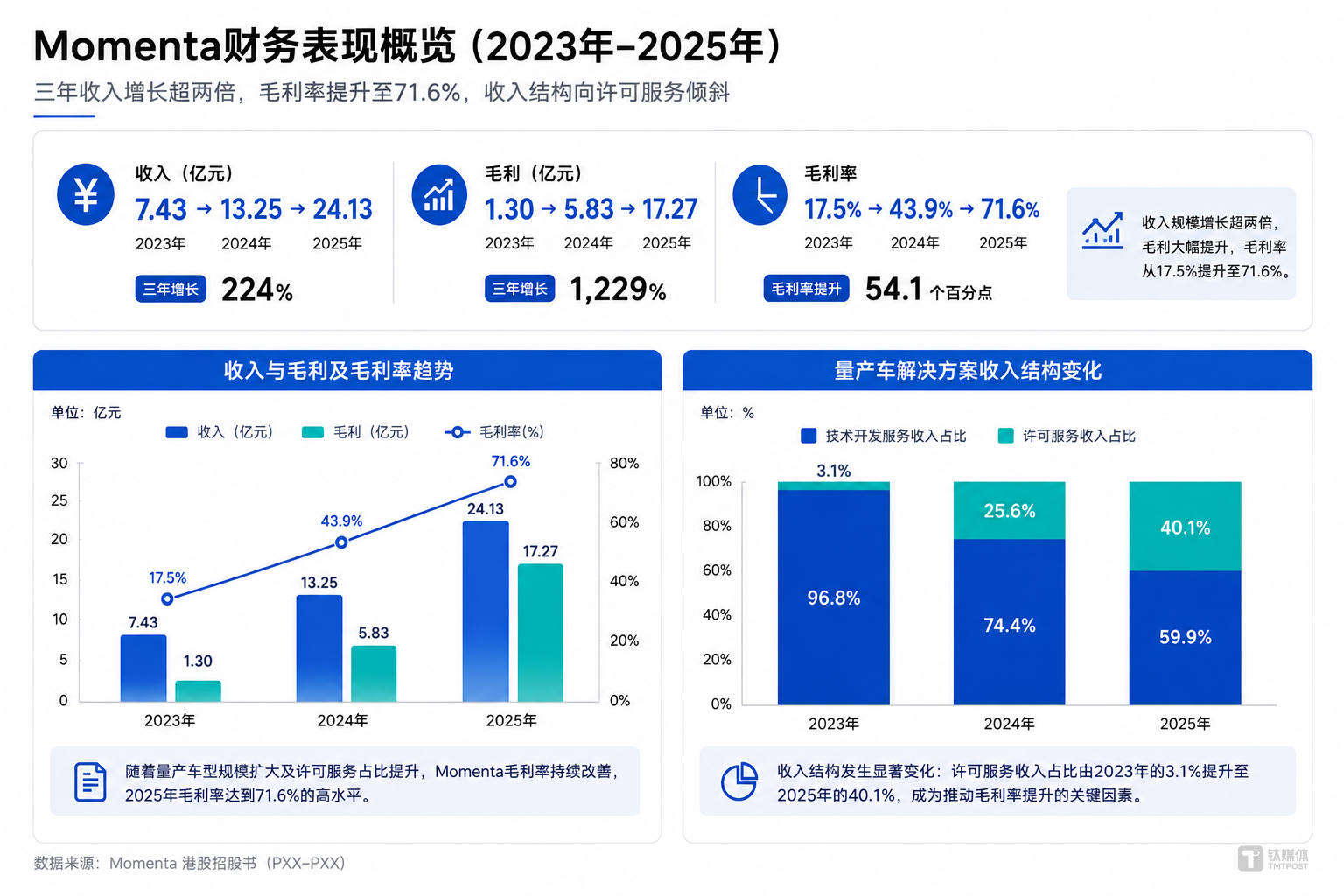
Momenta’s financial trajectory over the past three fiscal years reveals a company aggressively scaling its commercial footprint. According to its prospectus, top-line revenue has expanded rapidly, moving from project-based engineering fees toward a highly scalable software model. The company generated revenue of RMB 743 million in 2023, which expanded to RMB 1.325 billion in 2024, and reached RMB 2.413 billion by the close of 2025.
This top-line tripling over a three-year span was accompanied by a dramatic gross margin expansion. Gross profit rose from RMB 130 million in 2023 to RMB 1.727 billion in 2025, driving gross margins up from a meager 17.5% to a software-like 71.6%. The secret behind these numbers lies entirely in a structural evolution of Momenta's revenue mix.
Momenta’s mass-production revenue is divided into two phases: upfront, pre-production technical development service fees, and subsequent post-production software licensing fees per vehicle. In 2023, custom engineering and development fees accounted for a staggering 96.8% of total revenue, while high-margin licensing contributions were a negligible 3.1%. By 2025, that architecture flipped: technical development services normalized to 59.9%, while recurrent licensing fees surged to 40.1%.
Summary of prospectus-related data
The Software Inflection Point: While technical development fees resemble project-based, consulting revenue tied to automakers’ rigid R&D timelines, software licensing runs parallel to the vehicle's commercial lifecycle. Once an intelligent-driving solution is validated and integrated into a factory assembly line, the marginal cost of issuing an additional software license drops near zero, automatically driving expansion in gross margins.
The Crucial Leap from Design Wins to Factory Lines
In the automotive supply chain, the ultimate measure of health is the conversion rate of "design wins" (nominations) into active, high-volume factory production. Pipeline promises mean little if factory assembly lines remain idle.
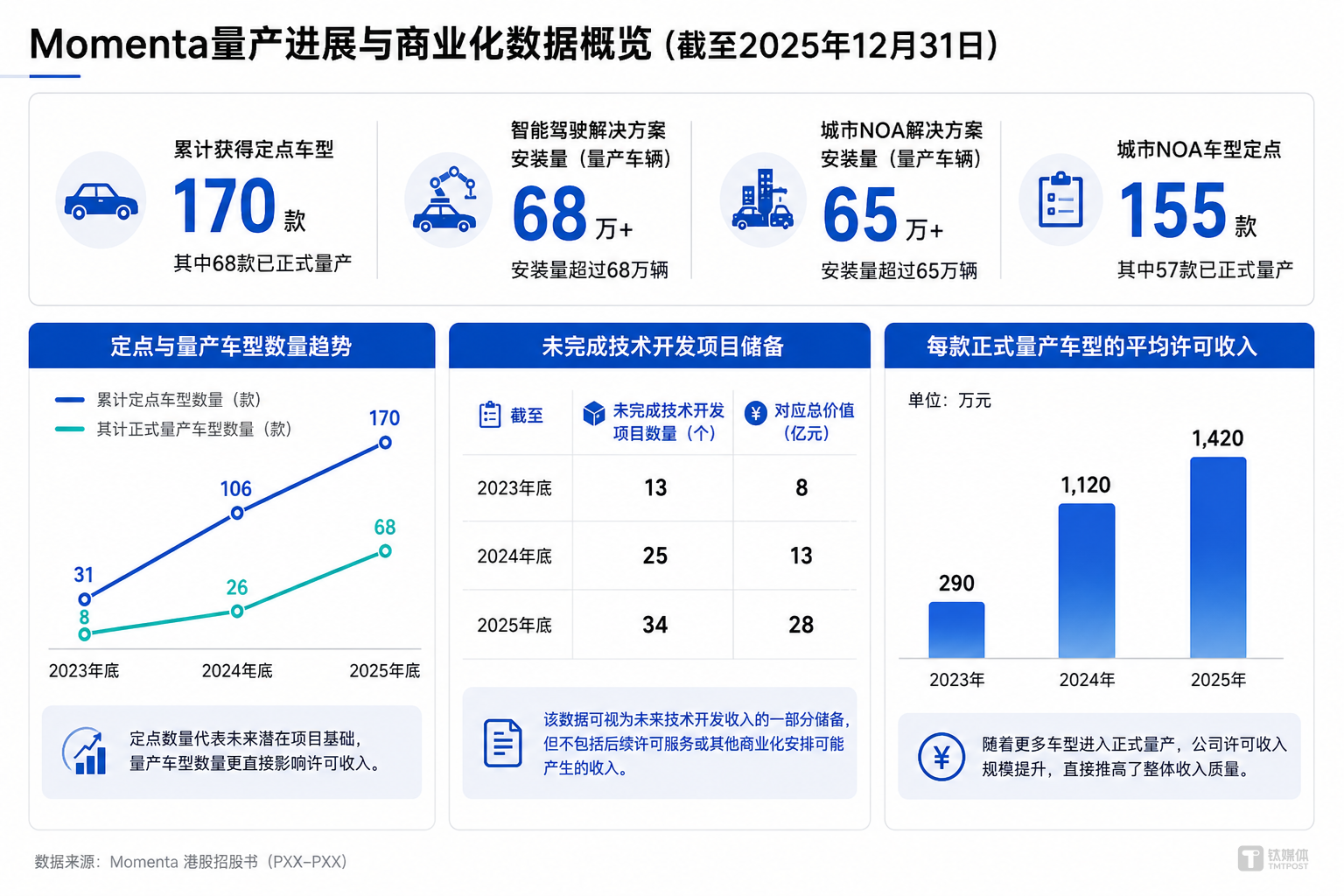
Momenta's operational cadence shows a pipeline successfully transitioning into mass volume. Cumulative vehicle nominations climbed from 31 models at the end of 2023, to 106 in 2024, and reached 170 by the close of 2025. Crucially, active mass-production models expanded from a base of just 8 models in 2023 to 26 in 2024, culminating in 68 models actively rolling off factory lines by the end of 2025. This expanding operational footprint means Momenta's intelligent-driving solutions are currently active on more than 680,000 mass-produced passenger vehicles.
The vanguard of this growth is the company's Urban Navigation on Autopilot (City NOA) suite. By the end of 2025, City NOA installations crossed 650,000 units, supported by a pipeline of 155 secured vehicle nominations, 57 of which are already in commercial production.
Summary of prospectus data
This momentum is backed by a visible pipeline of unfinished development contracts, which grew from 13 projects in 2023 to 34 projects by the end of 2025, representing a total backlog contract value of RMB 2.8 billion. This engineering backlog acts as a predictable baseline for near-term revenue. More importantly, the average software licensing revenue realized per active vehicle model scaled up from RMB 2.9 million in 2023, to RMB 11.2 million in 2024, and arrived at RMB 14.2 million in 2025. This compounding per-model yield demonstrates the financial leverage public markets have been demanding from autonomous-driving players.
Diversifying the Automaker Roster
As the race for localized, advanced driver-assistance systems (ADAS) intensifies within China, legacy global automakers face intense pressure to rapidly digitize their lineups. Rather than absorbing the multi-year capital expenditure of developing full-stack automated systems in-house, many are outsourcing to specialized third-party providers.
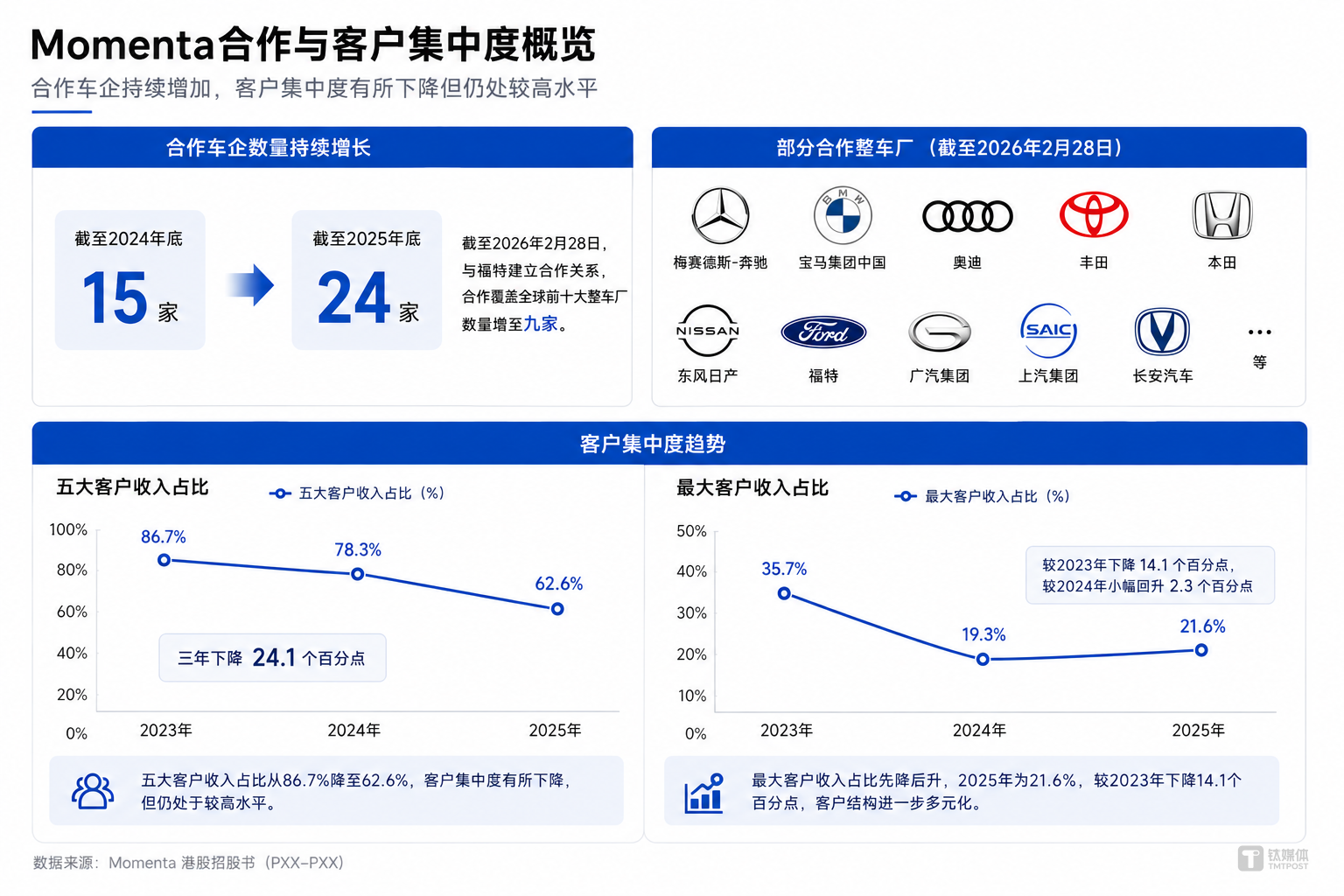
Momenta has capitalized on this trend, expanding its automaker ecosystem from 15 brands in 2024 to 24 by the end of 2025. Its current roster includes a mix of premium global marques and localized joint ventures, including Mercedes-Benz, BMW Group China, Audi, Toyota, Honda, and Dongfeng Nissan. A subsequent partnership signed with Ford on February 28, 2026, brought Momenta’s penetration to nine of the world’s top ten global automotive conglomerates.
Summary of prospectus data
This customer expansion has systematically diluted one of Momenta's primary historical risks: customer concentration. From 2023 to 2025, revenue from its top five customers accounted for 86.7%, 78.3%, and 62.6% of total revenue, respectively. Over the same period, revenue from its largest anchor customer normalized from 35.7% to 21.6%.
While high customer concentration is standard during an automotive supplier's early commercialization phase—where engineering teams must deeply embed themselves with a handful of launch partners—it poses a long-term risk to revenue stability. A sudden shift in an OEM’s procurement strategy or an internal pivot toward in-house development can crater a supplier’s quarterly guidance. Momenta’s expanding roster suggests a deliberate, structural mitigation of this exposure, a theme further underscored by its planned expansion into adjacent logistics and Robotaxi software networks to strengthen revenue diversification.
Heavy R&D Outlays and the Path to Profitability
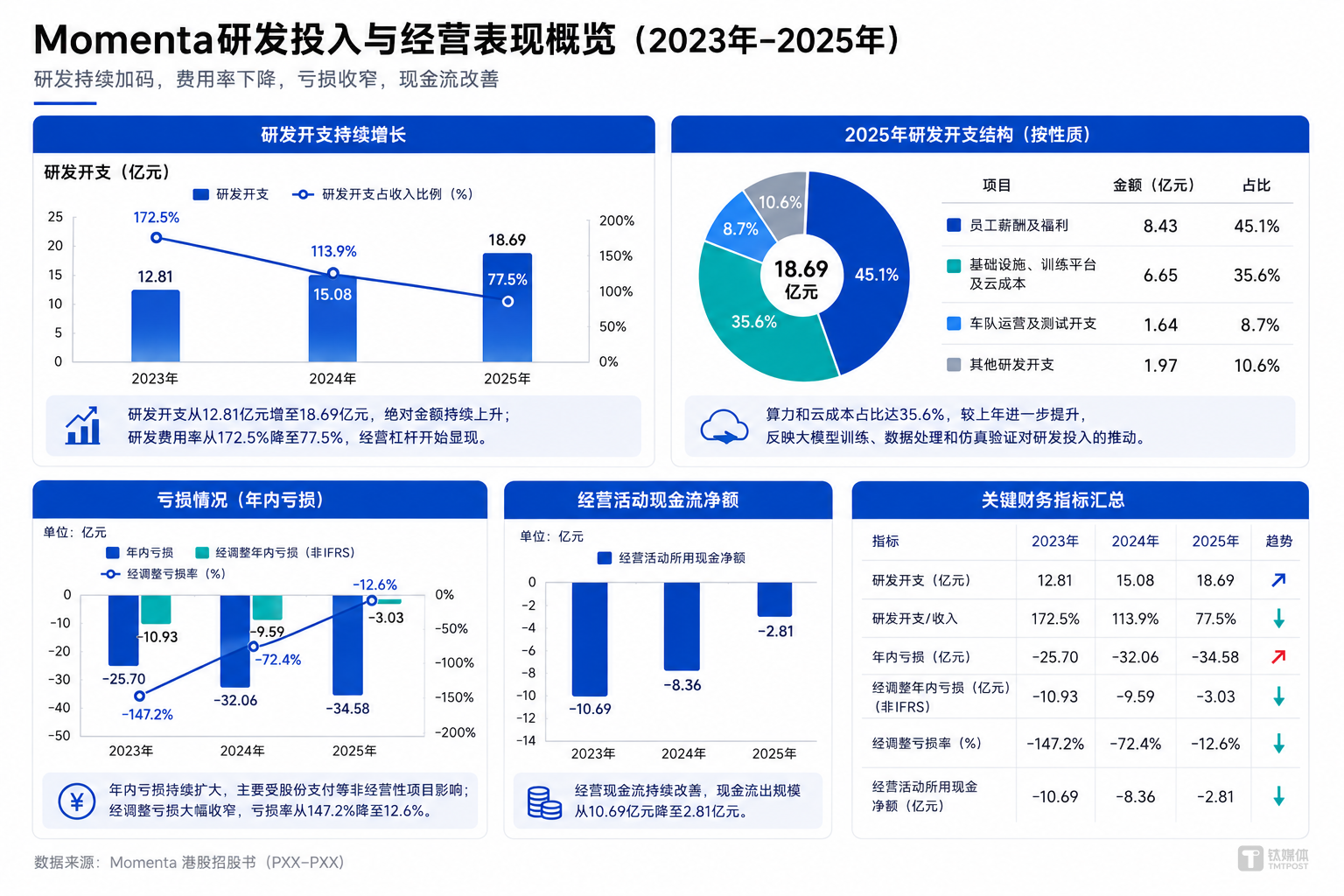
Sustaining a technological edge in the machine-learning space requires a relentless allocation of capital. Momenta’s research and development expenses continued their upward march in absolute terms, posting figures of RMB 1.281 billion in 2023, RMB 1.508 billion in 2024, and RMB 1.869 billion in 2025.
A closer look at the 2025 R&D spend reveals the changing nature of AI development. Human capital remains the largest line item, with RMB 843 million (45.1%) allocated to specialized engineering talent and benefits. Meanwhile, infrastructure, cloud storage, and large-model training platforms consumed RMB 665 million (35.6%)—a segment scaling rapidly as real-world vision models demand massive cloud computational power. Fleet operations and real-world testing accounted for the remaining RMB 164 million (8.7%).
Summary of relevant data from the prospectus
Crucially, however, Momenta's top-line scaling has begun outrunning its engineering outlays. The company's R&D-to-revenue ratio has dropped sharply, falling from 172.5% in 2023 to 113.9% in 2024, and finally arriving at a more sustainable 77.5% in 2025.
This operational efficiency is reflected in the company's adjusted bottom line. Under statutory IFRS reporting, Momenta’s headline losses look steep, coming in at RMB 2.570 billion, RMB 3.206 billion, and RMB 3.458 billion across the three-year window. However, these figures are heavily distorted by non-cash, paper transactions—specifically fair-value adjustments on preferred shares and share-based employee compensation.
When backing out these non-operational line items, Momenta's adjusted net losses tell a completely different story, narrowing from RMB 1.093 billion in 2023 to RMB 959 million in 2024, and dropping to just RMB 303 million in 2025. Consequently, its adjusted loss margin contracted from a negative 147.2% to a manageable negative 12.6%. This trajectory indicates that the core software business is close to generating structural net profits. Operating cash outflows have followed an identical pattern, shrinking from an annual burn of RMB 1.069 billion to a modest RMB 281 million by the close of 2025.
A Blue-Chip Cornerstone Lineup
To de-risk its public market debut, Momenta secured an elite cohort of 14 cornerstone investors who collectively locked up roughly HK$3.0 billion ($384 million) in shares—accounting for over half of the baseline offering.
The roster balances international institutional capital with direct automotive industry partners. Global asset managers anchor the group, including GIC, Fidelity International, BlackRock, Oaktree Capital, and Franklin Templeton. Strategic industrial partners add commercial validation, led by Mercedes-Benz, BYD, and semiconductor designer GigaDevice. The lineup is rounded out by major regional institutions, including Hillhouse, Boyu Capital, ChinaAMC, GF Fund, and Pacific Insurance.
This heavy corporate and institutional backing provides an important vote of confidence, signaling deep structural integration within the automotive ecosystem. Yet, as the opening bell approaches on the Hong Kong Exchange, Momenta will enter a rigorous public-market proving ground.
Going forward, analysts will judge Momenta on its execution of several key operational challenges. The company must prove it can continuously translate its burgeoning nomination backlog into factory volume, expand its high-margin licensing mix to preserve its 71% gross margin, and successfully manage pricing pressures as automakers demand lower hardware costs across the supply chain.
Momenta has successfully completed the journey from speculative tech demo to an active, high-volume production partner. But as it transitions onto the public stage, the market's focus will firmly shift from the novelty of its "Physical AI" pedigree to the predictable execution of its financial metrics.
(This article was first published on the TMTPost App; author | Li Yupeng, editor | Yang Lin)
 LIKE 0